
Whether or not a solar inverter can work without batteries
An Inverter Without Batteries is probably the most frequently sought information ever whenever an individual undertakes the process of designing a solar power installation. This is due to the belief by many that batteries must always be incorporated in the design. In actual fact, however, it is possible for a solar inverter to function ideally without the use of batteries if the situation calls for it.
In plain language, "A solar inverter is a device used to convert direct current into alternating current to meet the requirements of household appliances and the electrical grid." Batteries are peripherals and not essential to the process of converting the energy from direct to alternating current. This is what is central to the question of whether an inverter could function with the use of batteries.
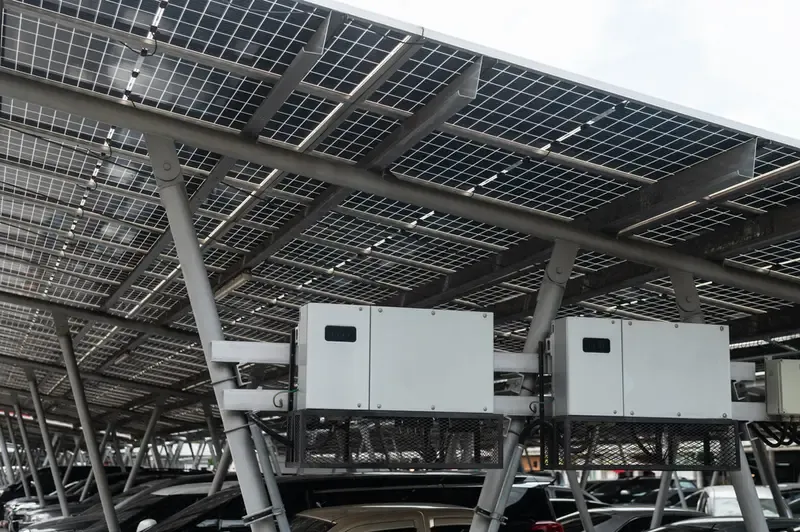
Comprehending an Inverter without Batteries
An inverter without batteries functions on the principle of converting solar energy directly. When solar radiation falls on the panels, the electricity is fed directly into the inverter. This powers the devices or can be fed into the grid. When solar energy is reduced, the output from the inverter is reduced unless another source is put into action.
Such a setup is also known by another name: the batteryless inverter system or inverter only arrangement. In this arrangement, the power comes from solar generation or from supplying the grid.
How Solar Power Functions in a Battery Less System
In a solar power system without a battery, the power flows in a simple manner. The solar cells produce direct current electricity. The current is then converted by an inverter into a form of electricity usable by appliances or sold to power utilities. The electricity is used immediately by appliances or sold to power utilities, if connected, immediately.
There is no intermediate storage. This enhances efficiency vastly, apart from simplifying the system, as it eliminates battery charge and discharge losses. As reported in the National Renewable Energy Laboratory Distributed Solar PV for Electricity System Resiliency report, battery-less systems are well established and technology is mature, particularly within a grid-connected scenario, where the grid function is that of a balancing mechanism for demand and supply.
Common Types of Battery-Less Inverter Systems
All inverters without battery designs do not work in the same way. The nature of the system layout determines its functionality.
Grid Connected Inverter Systems
The most basic batteryless system is the grid-connected inverter. This configuration consists of solar panels connected to an inverter that is synchronized to the public electricity grid. During days when solar energy generated surpasses the energy demand in the house, the excess energy is fed to the grid. During times when energy generated is lower than the energy demand, the energy is again sourced from the grid.
This grid tie inverter is commonly used because it doesn’t require batteries and still provides uninterrupted power. In its entry on Wikipedia Grid tied Electrical System, the Wikimedia Foundation describes how grid-tied inverters turn off when there is an outage, which is an important drawback of batteryless inverters.
Direct Solar Inverter Working
Other power generation systems work on inverter direct solar setups where power can be utilized only when sunlight is available. This system can be found in agricultural water pumps, ventilation setups, or industry operations that occur during the day. When clouds move in or when the sun goes down, no power can be derived from such setups.
It is most appropriate when there is considerable matching between energy consumption and solar output.
Benefits of Using an Inverter without Batteries
Selection of an inverter without batteries is associated with several merits.
Lower System Cost
Batteries have been identified to be one of the costliest parts of any solar power system. Batteries have been removed to increase the cost-effectiveness of the solar power system.
More Overall Efficiency
There are less energy losses in the case of batteries. For each and every charge and discharge of the battery, some power is lost. There are no losses in the direct solar to inverter mode.
Simpler Maintenance
Batteries need maintenance, replacment, and concern with thermal management. In a solar system with no battery, there is fewer elements at risk of failure.
Shortcomings of Batteryless Inverter Systems
In spite of their benefits, inverter without batteries is not suitable in all situations.
Lack Of Power During Widespread Outages
In grid connectivity systems, the inverter needs to switch off when the grid goes down. This is necessary to prevent the backfeeding of electricity into the power grid. Consequently, with the absence of sunlight, in a standard batteryless grid connectivity inverter system, the system would not provide any power.
depending on Sunlight Timing
In direct solar inverted systems, power is generated only during daylight. Operation during non-power hours necessitates connection to the power grid or another means of power generation.
Reduced Energy Independence
Storage provides users with a means of storing their excess energy for consumption when needed. This promotes both consumption and independence from the grid.
Technological Perspective Regarding Battery and Without Battery Design
Academic literature helps to better understand the importance of batteries to system performance. The Diva Portal Grid Connected Solar PV System with Battery Storage study compares and contrasts systems with and without energy storage to demonstrate that reliability and self-consumption capabilities improve most with energy storage, rather than mere inverter performance.
From a technical perspective, the need for batteries on the inversion device itself is not required for the device to operate. Batteries are incorporated into the system for specific objectives.
Comparative Analysis of Solar Inverter Topologies
| System Type | Battery Used | Power During Outage | Typical Use Case |
| Grid connected inverter | No | No | Residential and commercial grid tied solar |
| Direct Solar Inverter | No | Only with sunlight | Pumps and daytime loads |
| Hybrid inverter system | Yes optional | Yes with batteries | Backup power and energy storage |
When Does an Inverter Without Batteries Make Sense
A battery-less inverter is considered a good option if the power quality is high, or if the price is the prime concern. It is also suitable if the consumption pattern is mostly during the day or if the grid is also a backup option.
grid-connected solar systems without storage devices of any kind currently offer the cheapest way for consumers to go solar.
When Batteries Become Necessary
Batteries are useful where backup power is needed when the lights go out or where the use of energy is needed at night. Off-grid solutions always need batteries.
With a hybrid inverter, one can begin with no battery and add when the need arises. Here, flexibility and cost are put into consideration.
An inverter without batteries is perfectly functional and already provides the foundation for most grid-connected solar systems. Energy conversion, not energy storage, is the inverter’s function. Batteries are additional features to make the inverter serviceable but not essential for its functionality.
Knowing how batteryless inverter systems work and where the technology is headed can help you pick the right design for you. For someone trying to decide if a batteryless solar power configuration is an option, the next step is clearly an analysis of the load and the power availability.
About the Author