
What is the cost of solar system in Pakistan?
Faced with persistent power shortages and rising electricity bills, more and more Pakistani households and businesses are turning their attention to solar energy. However, a core question always lingers: What is the actual solar system cost Pakistan? Is it truly worth the value? This article provides an in-depth analysis of Pakistan solar pricing, helps you define your solar budget Pakistan, and determines whether this is a wise investment.
Ⅰ、Why Has Solar Become a Focal Point in Pakistan?
Before discussing the specific solar installation cost, it's crucial to understand the driving forces behind it:
- Energy Crisis:Frequent load-shedding, especially in summer, has turned backup power from a "luxury" into a "necessity."
- High Electricity Costs:Continuously rising grid tariffs make the long-term savings from solar highly attractive.
- Abundant Sunlight:Pakistan enjoys over 300 days of strong sunlight annually, making solar systems extremely efficient.
- Policy Support:Net metering policies allow users to sell excess power back to the grid, further shortening the payback period.
Ⅱ、Detailed Breakdown of Solar System Cost Pakistan: Where Does the Money Go?
The solar setup cost in Pakistan is not a fixed figure; it is primarily determined by system scale, configuration, and brand. Here is a general price breakdown:
Common System Types & Their Solar Price in Pakistan:
Off-Grid System: Includes battery storage, ensuring power supply during outages. This is the most expensive option.
Grid-Tied System: Does not include batteries; connects directly to the grid. Relies on net metering and does not work during power cuts (unless equipped with a hybrid inverter and small battery). This has a lower solar installation cost.
Hybrid System: Combines the advantages of both, offering battery backup and grid interaction. It is currently the most popular choice but comes with a higher initial solar installation cost.
A typical solar budget Pakistan for a middle-class household (with monthly consumption of about 600-800 units) is roughly as follows:
3kW Grid-Tied System: Price range approximately PKR 450,000 - 600,000.
5kW Hybrid System: Price range approximately PKR 750,000 - 1,100,000.
10kW Commercial Hybrid System: Price can reach PKR 1,500,000 - 2,200,000 or higher.
Core Cost Components:
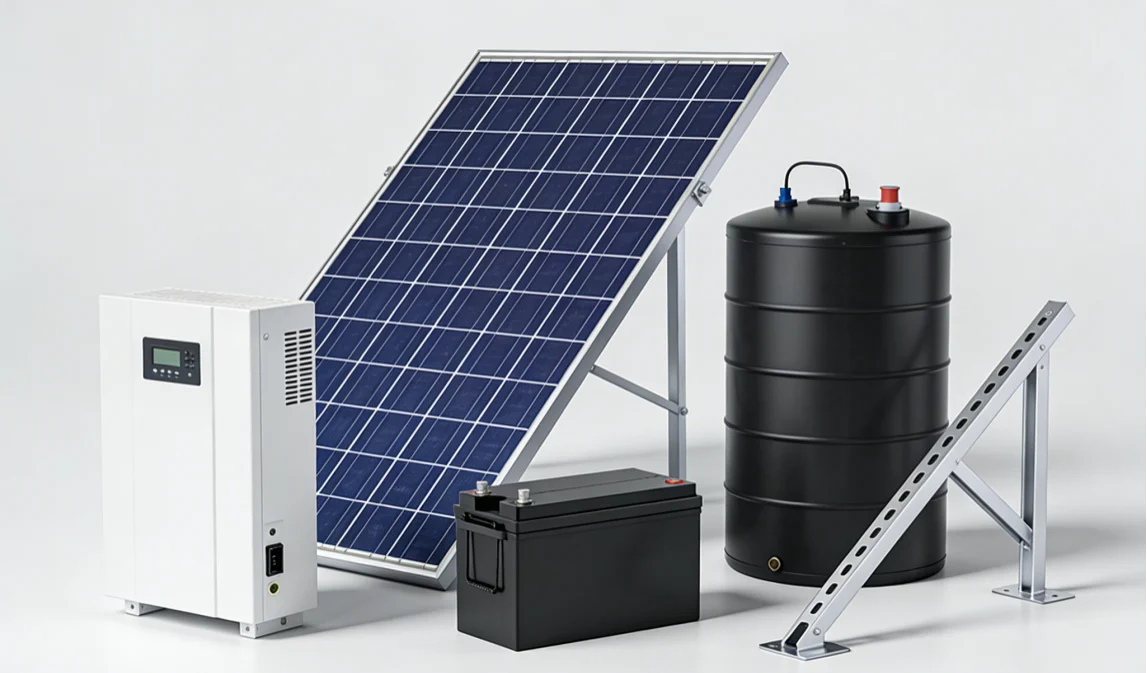
Solar Panels: Account for 40-50% of the total cost. Monocrystalline/Polycrystalline panels are the mainstream choice.
Inverter: The "brain" of the system, converting DC to AC. Hybrid inverters are more expensive than grid-tied ones.
Battery Storage: This is the largest variable driving up the solar setup cost. Lithium-ion batteries last longer and are more efficient but cost 2-3 times more than lead-acid batteries.
Mounting Structure & Accessories: Includes racks, cables, connectors, etc.
Labor & Design: A professional installation team is crucial.
Permits & Grid Connection Fees: Applying for net metering with the local power company may incur related costs.
III、Return on Investment Analysis: Can High Input Yield High Returns?
This is key to assessing whether the solar system cost Pakistan is justified.
Grid-Tied System (Without Batteries): Has the shortest payback period, typically 3-5 years. The system lifespan can exceed 25 years, meaning electricity for over 20 years thereafter is almost free.
Hybrid/Off-Grid System (With Batteries): Due to the additional cost and replacement needs of batteries (lead-acid every 3-5 years, lithium every 8-12 years), the payback period extends to 6-9 years. However, the value it brings is 24/7 uninterrupted power supply, which for commercial operations or households intolerant of outages is worth far more than just bill savings.
Simple Calculation Example:
Assume your monthly electricity bill is PKR 30,000. After installing a 5kW hybrid system with a solar price in Pakistan of PKR 1,000,000, your bill drops to nearly zero. Thus, you save approximately PKR 360,000 per year. Not accounting for battery replacement, the initial investment could be recouped in about 2.8 years. The annualized return rate exceeds 35%, far surpassing most traditional investments.
Ⅳ、Practical Advice for Potential Investors
1.Accurately Assess Needs: Analyze your electricity bills and load-shedding patterns. Do you need to save on bills, or completely solve the power outage problem? This directly determines whether your solar budget Pakistan should go towards a grid-tied or hybrid system.
2.Obtain and Compare Quotes: Request detailed quotes from at least 3-4 reputable suppliers, clearly listing equipment brands, models, capacity, warranty periods, and total solar installation cost.
3.Prioritize Quality: In the Pakistan solar pricing market, never compromise for the lowest price alone. High-quality inverters and panels, though slightly higher in initial solar setup cost, offer greater long-term reliability and power generation.
4.Explore Financing Options: Many Pakistani banks offer "Green Finance" loans specifically for solar projects, which can ease initial capital pressure.
5.Verify Net Metering Policies: Before deciding to install, check with your local power distribution company (e.g., LESCO, KE) for the latest net metering application processes and terms.
Conclusion
In summary, investing in a solar system in Pakistan is not only worthwhile but is rapidly becoming a shrewd economic decision and a necessary energy security measure. Although the initial solar system cost Pakistan may seem like a significant expense, when viewed as a long-term infrastructure investment, its return rate is remarkably favorable.
The final decision depends on your specific needs, consumption patterns, and the importance you place on energy independence. By carefully planning your solar budget Pakistan, choosing reliable suppliers and high-quality equipment, a solar system will provide you with clean, cheap, and reliable electricity for decades to come, effectively hedging against rising electricity prices and power shortages. Under the Pakistani sun, the glow of this investment is shining brighter than ever.
About the Author